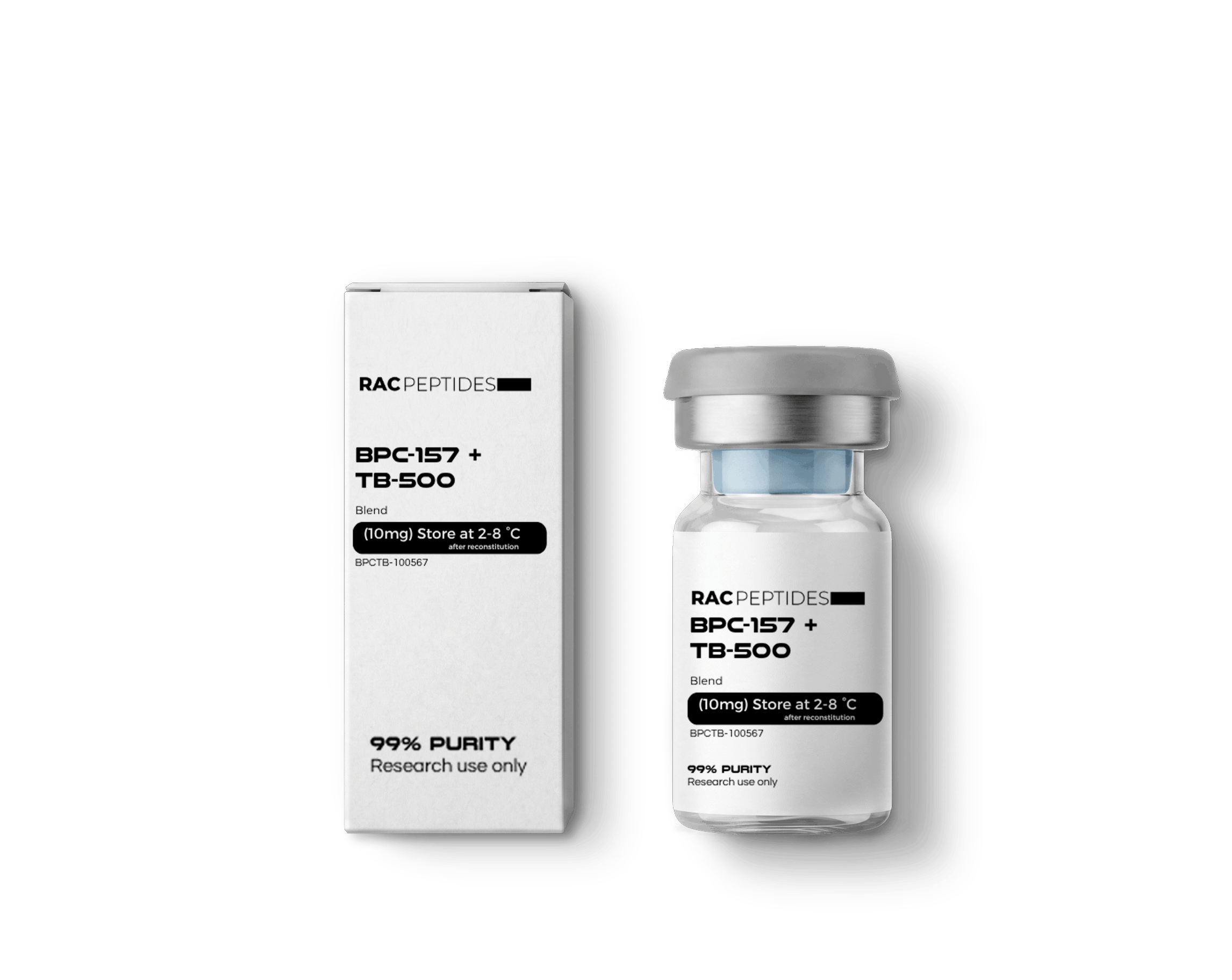
BPC-157 + TB-500 Blend
BPC-157 + TB-500 — Pentadecapeptide BPC and Thymosin β4 fragment combined
Research use only — intended for laboratory research. Not for human or veterinary use.
This blend pairs two of the most actively studied peptides in the tissue-repair literature. BPC-157 is a 15-amino-acid fragment of a human gastric protective protein, known in the research community for its effects on angiogenesis, collagen synthesis, and protection of the gastric mucosa. TB-500 (Ac-LKKTETQ) is the synthetic active fragment of thymosin β4, an actin-sequestering protein involved in cell migration and wound closure. The combination is widely studied because the two molecules act on distinct but complementary axes — BPC-157 supports the extracellular matrix and microvasculature, while TB-500 drives intracellular reorganization and cell-migration capacity.
- Mol. weight
- 1419.53 / 889.02
- Purity
- ≥99.0% each component
- Form
- Lyophilized powder
- Storage
- −20°C, dry, dark
- CAS
- 137525-51-0 (BPC-157) / 885340-08-9 (TB-500)
- Formula
- C62H98N16O22 (BPC-157) · C38H68N10O14 (TB-500)
- Mol. weight
- 1419.53 / 889.02
- Purity
- ≥99.0% each component
- Form
- Lyophilized powder
- PubChem CID
- 9941957
Store lyophilized peptide at −20°C, protected from light and moisture. Once reconstituted, store at 2–8°C and use within 30 days.
This blend pairs two of the most actively studied peptides in the tissue-repair literature. BPC-157 is a 15-amino-acid fragment of a human gastric protective protein, known in the research community for its effects on angiogenesis, collagen synthesis, and protection of the gastric mucosa. TB-500 (Ac-LKKTETQ) is the synthetic active fragment of thymosin β4, an actin-sequestering protein involved in cell migration and wound closure. The combination is widely studied because the two molecules act on distinct but complementary axes — BPC-157 supports the extracellular matrix and microvasculature, while TB-500 drives intracellular reorganization and cell-migration capacity.
The RAC
standard
QuestionsQuestions
Each vial contains lyophilized peptide powder at the labeled dosage. No solvents, fillers, or preservatives.
Every batch is HPLC-tested. Certificate of Analysis (COA) and HPLC report are available on the product page.
Store the lyophilized peptide at −20°C, dry and dark. See the Storage tab for product-specific details.
United States only, in temperature-controlled packaging. 3–5 day standard or 1–2 day express.
No. All products are for laboratory and research use only (RUO) and are not intended for human or veterinary use.
Research use only. Not for human or veterinary use.